
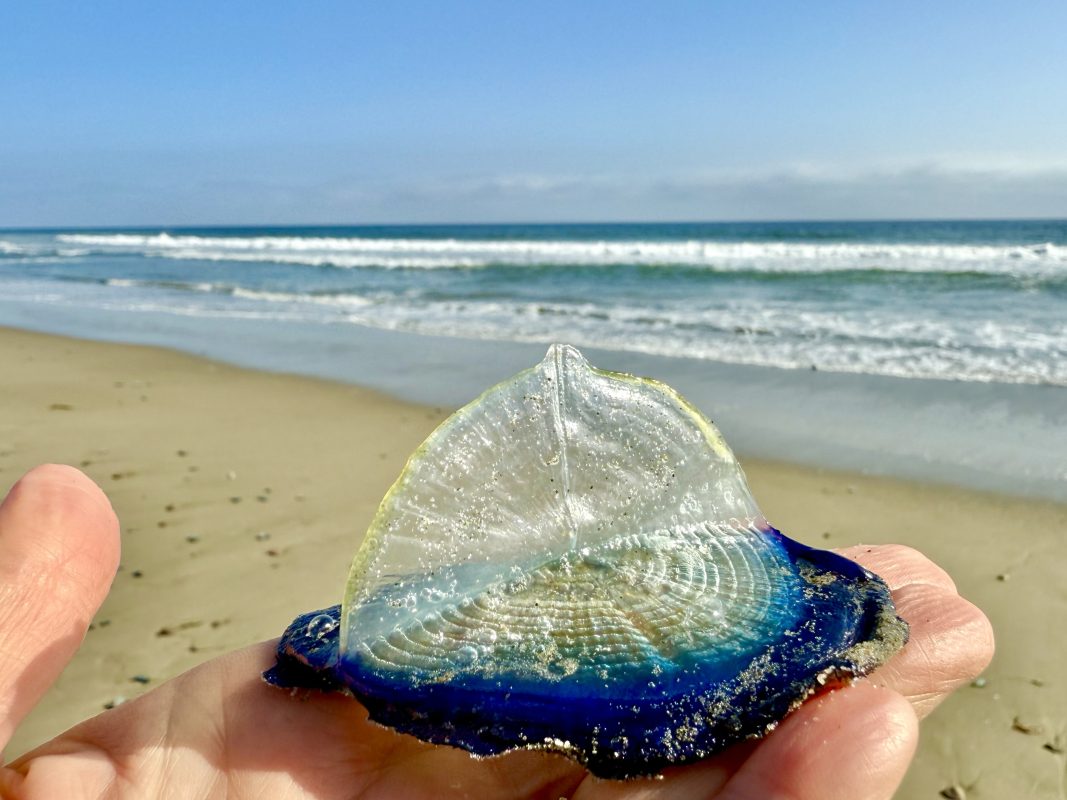
Yes — jellyfish in Phuket are a real, recurring thing, not a rare scare story. Several incidents were reported across Phuket’s beaches in 2026 alone. The good news: serious stings are uncommon, and knowing what you’re dealing with makes a real difference.
Jellyfish in Phuket, the short version
Phuket sees mostly moon jellyfish and Portuguese man o’ war, with occasional box jellyfish reports (more common in the Gulf of Thailand than Phuket specifically, but documented here too). Two loose peak windows: April–May and October–November, though sightings can happen anytime. Most stings are painful, not dangerous — but treatment is not the same for every species, which is the part most advice online gets wrong.
🪼 What You’ll Actually Encounter
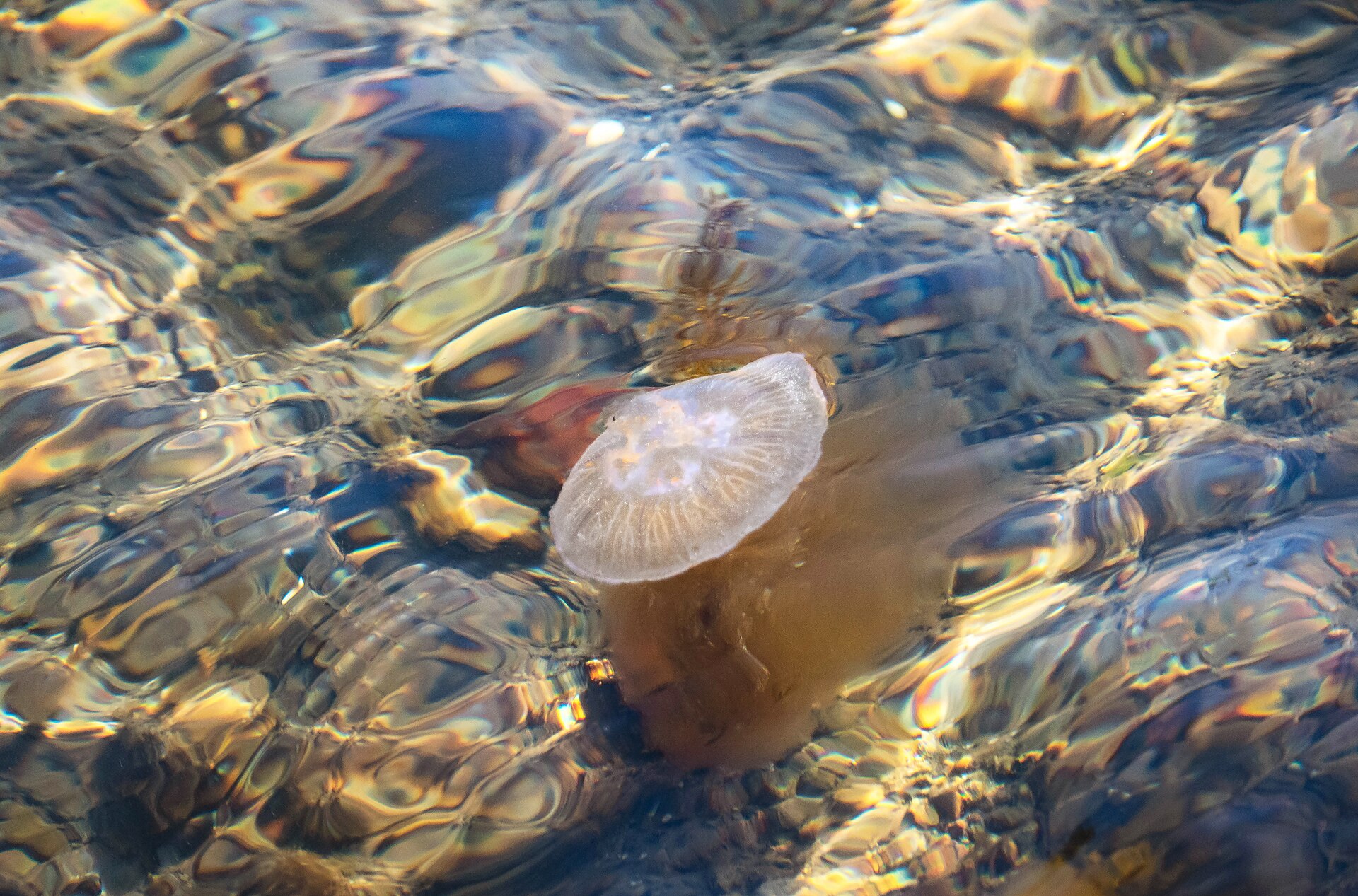
Moon jellyfish (Aurelia aurita), public domain / CC0, Wikimedia Commons
Four species account for nearly every reported case of jellyfish in Phuket, and the one pictured here, the moon jellyfish, is by far the most common and mildest of them.
Moon jellyfish (Aurelia)
A mild sting most people barely notice beyond redness and irritation.
Portuguese man o’ war
Not technically a jellyfish — a siphonophore. Reported multiple times on Phuket’s west coast in 2026.
Box jellyfish
Uncommon in Phuket specifically, more frequent in the Gulf of Thailand. Occasionally fatal elsewhere in Thailand — worth knowing the warning signs.
Sea nettles (Chrysaora)
Sometimes misidentified as box jellyfish in local reports. Milder sting.
Confirmed sightings have been reported on Phuket’s west coast beaches as recently as 2026 — Bangkok Post covered a Portuguese man o’ war warning across three beaches.
🩹 First Aid: Why “Just Use Vinegar” Isn’t the Full Answer
Most online advice treats every jellyfish sting the same. It shouldn’t.
- Get out of the water
- Rinse with vinegar if available — it deactivates unfired stinging cells
- Remove visible tentacle fragments without bare hands
- Hot water immersion can help with pain
- Don’t use fresh water or rub the area
- Thai lifeguards & DMCR officially advise vinegar first, seawater if unavailable
- Some newer research suggests seawater + hot water instead, skipping vinegar
- Both agree: seawater rinse is the safe default
- No fresh water, no rubbing, no urine (still a myth)
Sources: official Thai first-aid guidance (Nation Thailand), Mass General Brigham, NIH/PMC research on jellyfish sting treatment.
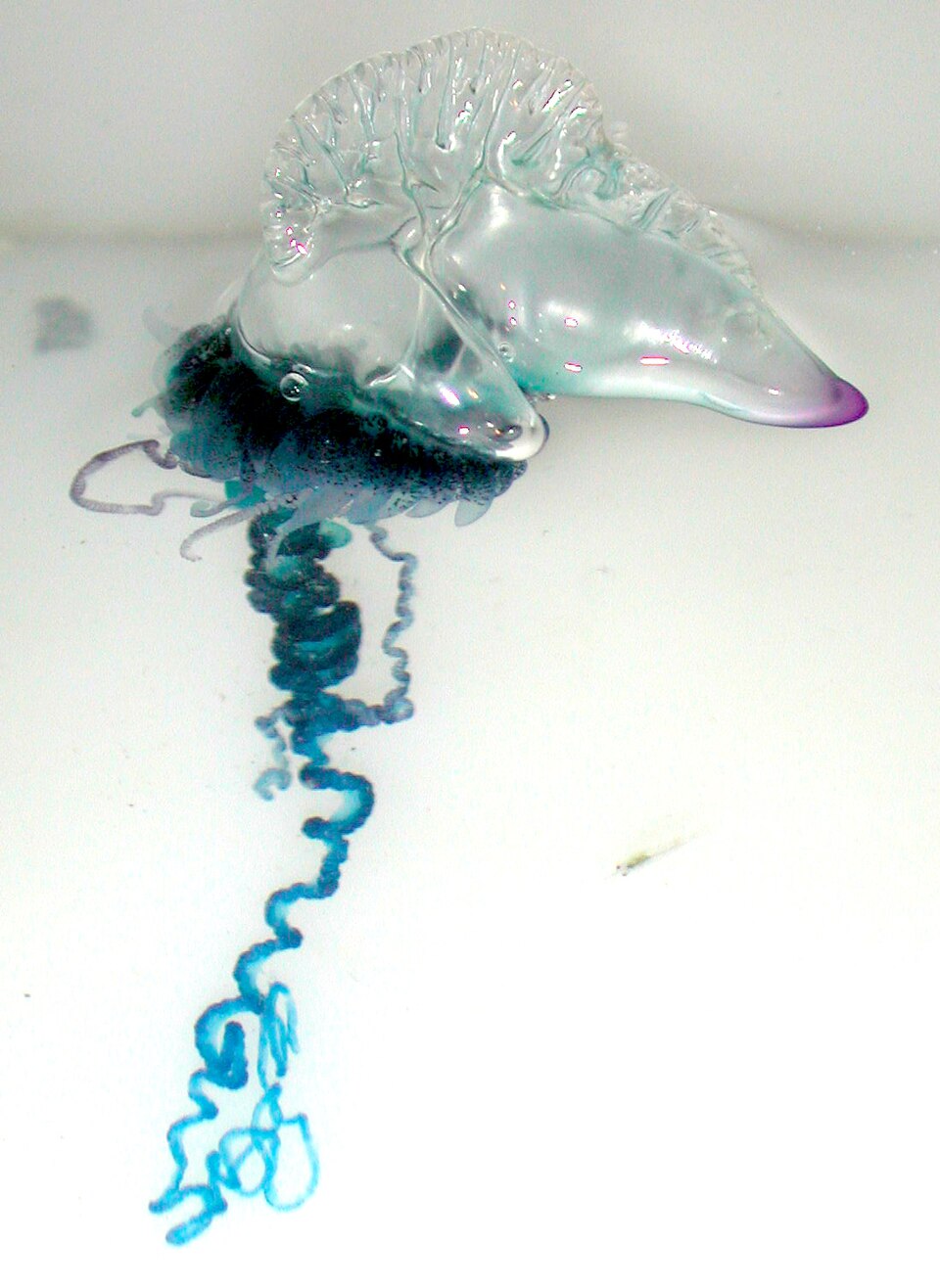
Portuguese man o’ war (Physalia physalis), public domain, courtesy NOAA / Wikimedia Commons
If you’re not sure which one stung you: rinse with seawater, avoid fresh water and rubbing either way, and use vinegar only if you have it and symptoms aren’t severe. When in doubt, ask a lifeguard on the beach, they’ll know what’s actually been reported that week.
🚨 When to Get Real Medical Help, Not Just First Aid
🛡️ Reducing Your Risk in the First Place
You can’t eliminate the chance of jellyfish in Phuket entirely, but a few habits cut the risk considerably:
- Check for warning flags and signs — Phuket beaches do post them when jellyfish are reported
- Ask lifeguards or your hotel/hostel before swimming during April–May or October–November
- Never touch a jellyfish on the sand, even if it looks dead — the sting can still fire
- Consider a rash guard or Lycra top if you’re swimming during a reported bloom
🪼 Mostly mild stings
🚩 Check beach flags
🧴 Lycra top helps
❓ Frequently Asked Questions
Are there dangerous jellyfish in Phuket?
Most jellyfish in Phuket cause mild stings. Box jellyfish, the genuinely dangerous species, are rare here compared to Thailand’s Gulf islands, but have been documented nearby.
When is jellyfish season in Phuket?
Roughly April–May and October–November see more reports, but sightings aren’t strictly limited to those windows.
Should I use vinegar on a jellyfish sting in Phuket?
For most true jellyfish stings, yes. For Portuguese man o’ war specifically, official Thai guidance says vinegar; some newer research disagrees. Seawater rinse is the safe default either way — never fresh water.
Is it safe to swim in Phuket?
Yes, most of the time — jellyfish incidents are reported, not constant. Check local flags and ask lifeguards if you’re unsure on a given day.
Heading to the beach? See our guides to Nai Yang Beach and where to stay nearby.
Stay Close to the Beach, Informed Before You Swim
Whichever beach you’re headed to, a little preparation goes a long way — knowing about jellyfish in Phuket before you swim beats finding out the hard way. Base yourself minutes from Nai Yang Beach and the airport, whether you want a social dorm or a private bungalow.
Book Friends Retreat →
Book Friends Hostel →
✓ Free cancellation up to 24h before arrival · Pay on arrival (Mar–Oct)
This page provides general safety information based on published sources and is not a substitute for professional medical advice. For any serious sting or allergic reaction, seek medical attention immediately.
